12 Easy Hikes in Sedona with Big Scenic Payoffs
You don’t have to scramble up Cathedral Rock or spend half the day on a trail to experience Sedona properly.
Some of the best views here are surprisingly easy to reach.
There are short walks beneath enormous red-rock formations, peaceful canyon trails, beginner-friendly loops, and easy paths that work well when you’re traveling with family—or when your legs simply need a break.
Below are my favorite easy hikes in Sedona, including what each one actually feels like so you can choose a trail that matches your comfort level rather than relying on an “easy” rating alone.
First: What Does “Easy” Mean in Sedona?
This is worth talking about before we get to the trails.
“Easy” is subjective.
A two-mile desert trail can feel effortless on a cool morning and exhausting under strong afternoon sun.
Sandstone can also be uneven, rocky, or slippery even when a trail has very little elevation gain.
For this guide, I’m treating an easy hike as one that generally has:
- Limited elevation gain
- Little or no scrambling
- A relatively straightforward trail
- A manageable distance
- No need for advanced hiking skills
That doesn’t mean every trail here will suit every person.
Your fitness, mobility, weather conditions, and hiking experience still matter.
Easy Sedona Hikes at a Glance
If you don’t want to compare 12 trail descriptions right now, start here.
| Trail | Best For | General Effort | Time Commitment |
|---|---|---|---|
| Yavapai Vista | Big views with little effort | Very easy | Short |
| Fay Canyon | First-time hikers | Easy | 1–2 hours |
| Bell Rock Pathway | Classic Sedona scenery | Easy | Flexible |
| Sugarloaf Loop | Sunrise | Easy | Short |
| Teacup Trail | Quiet red-rock walking | Easy–Moderate | 1–2 hours |
| Deadman’s Pass | Relaxed desert scenery | Easy | Flexible |
| Crescent Moon area | Cathedral Rock views | Easy | Short |
| Marg’s Draw | Convenient hiking near town | Easy–Moderate | Flexible |
| Thunder Mountain Trail | Red-rock views | Easy–Moderate | Flexible |
| Andante Trail | Peaceful morning walk | Easy | Flexible |
| Jordan Trail | Open desert scenery | Easy–Moderate | Flexible |
| Red Rock Crossing area | Families & photography | Easy | Short |
Important: These are general comparisons rather than guarantees. Trail conditions, heat, route choices, closures, and access can change the experience considerably.
1. Yavapai Vista Trail — Best Easy Hike for Maximum Views
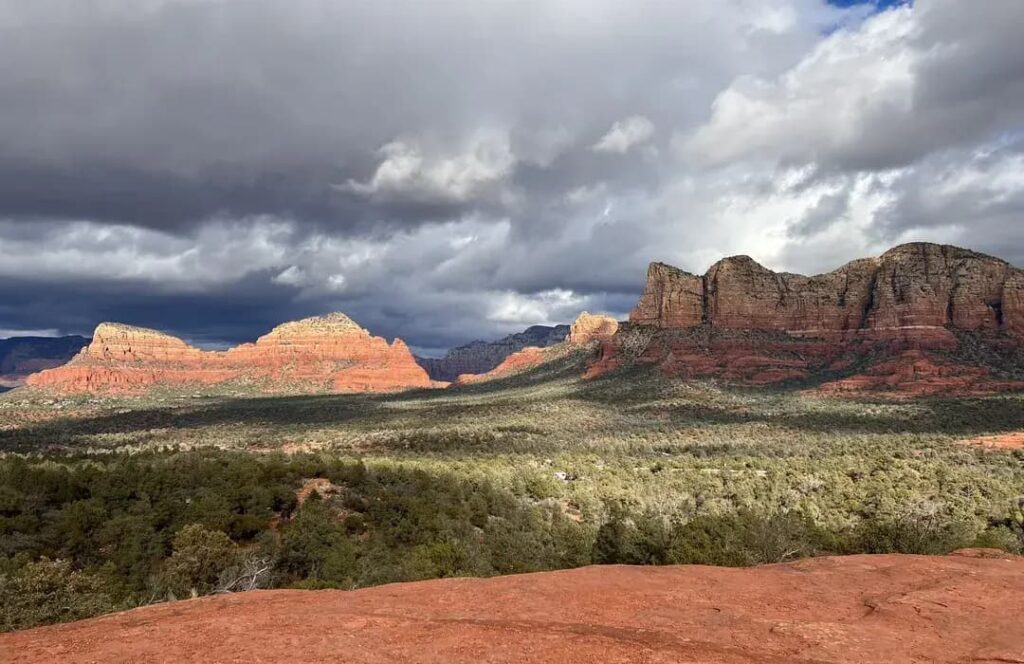
Let’s start with one of the easiest wins in Sedona.
Yavapai Vista is ideal when you want to get out of the car, walk through the landscape, and see recognizable red-rock formations without committing to a long hike.
You get views toward Bell Rock and Courthouse Butte, yet the outing can remain relatively short.
That’s a pretty good trade.
Why I Like It for Beginners
There’s less pressure.
You’re not hiking for hours toward a viewpoint that you have to reach for the trail to feel worthwhile.
The scenery starts early.
That means you can walk, take photos, enjoy the landscape, and turn around when you’ve had enough.
For someone nervous about their first desert hike, that’s exactly the kind of experience I’d choose.
Who Should Pick Yavapai Vista?
It’s especially useful for:
First-time hikers who aren’t sure how they’ll handle Sedona’s terrain.
Families looking for something manageable.
Photographers who care more about scenery than mileage.
Travelers short on time who still want to get onto a trail.
And anyone recovering from yesterday’s ambitious hiking plans.
Best for: Big views with minimal commitment
General difficulty: Easy
Scenery: Bell Rock and Courthouse Butte
Good to know: Sun exposure can make a short walk feel considerably harder in hot weather.
2. Fay Canyon — Best Sedona Hike for Beginners
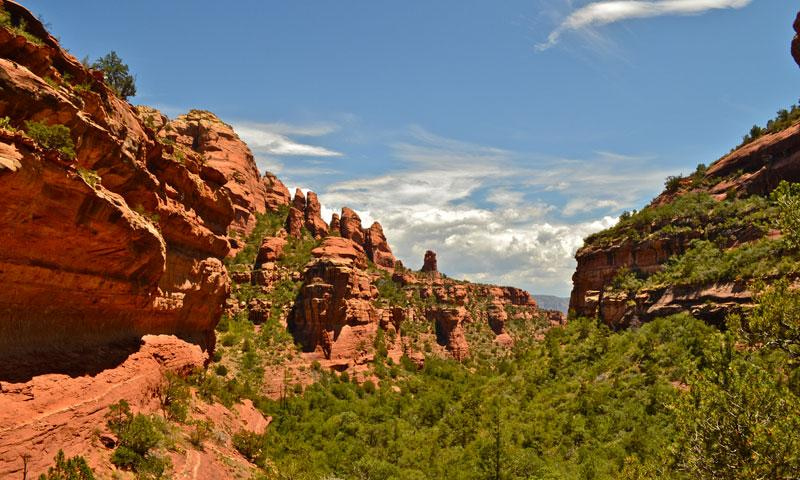
If Yavapai Vista is more of a quick scenic experience, Fay Canyon feels like a proper hike without immediately throwing you into difficult terrain.
That’s why I’d put it near the top of the list for anyone searching for Sedona hikes for beginners.
The trail takes you into a canyon with towering red-rock walls around you.
Instead of climbing aggressively upward, you’re moving deeper into the landscape.
It feels adventurous without requiring you to prove anything.
Why Fay Canyon Works So Well
The scenery builds gradually.
You don’t have to reach a summit or stand on an exposed ledge to get something out of the hike.
As you continue into the canyon, the surrounding walls become the experience.
It’s also easy to understand mentally.
Walk in, explore, and return.
For beginners, that simplicity matters.
Is Fay Canyon Family-Friendly?
It can be one of the better family-friendly hikes in Sedona, particularly for families already comfortable walking on natural terrain.
But don’t treat “family-friendly” as meaning stroller-friendly or completely flat.
This is still a desert hiking trail.
Kids need appropriate shoes, water, sun protection, and supervision.
And if everyone is getting tired?
Turn around.
Nobody receives a certificate for reaching the farthest possible point.
Best for: Beginner hikers
General difficulty: Easy
Experience: Canyon walking
Good for families: Potentially, depending on children’s experience and conditions
3. Bell Rock Pathway — Best Easy Hike for Classic Sedona Scenery
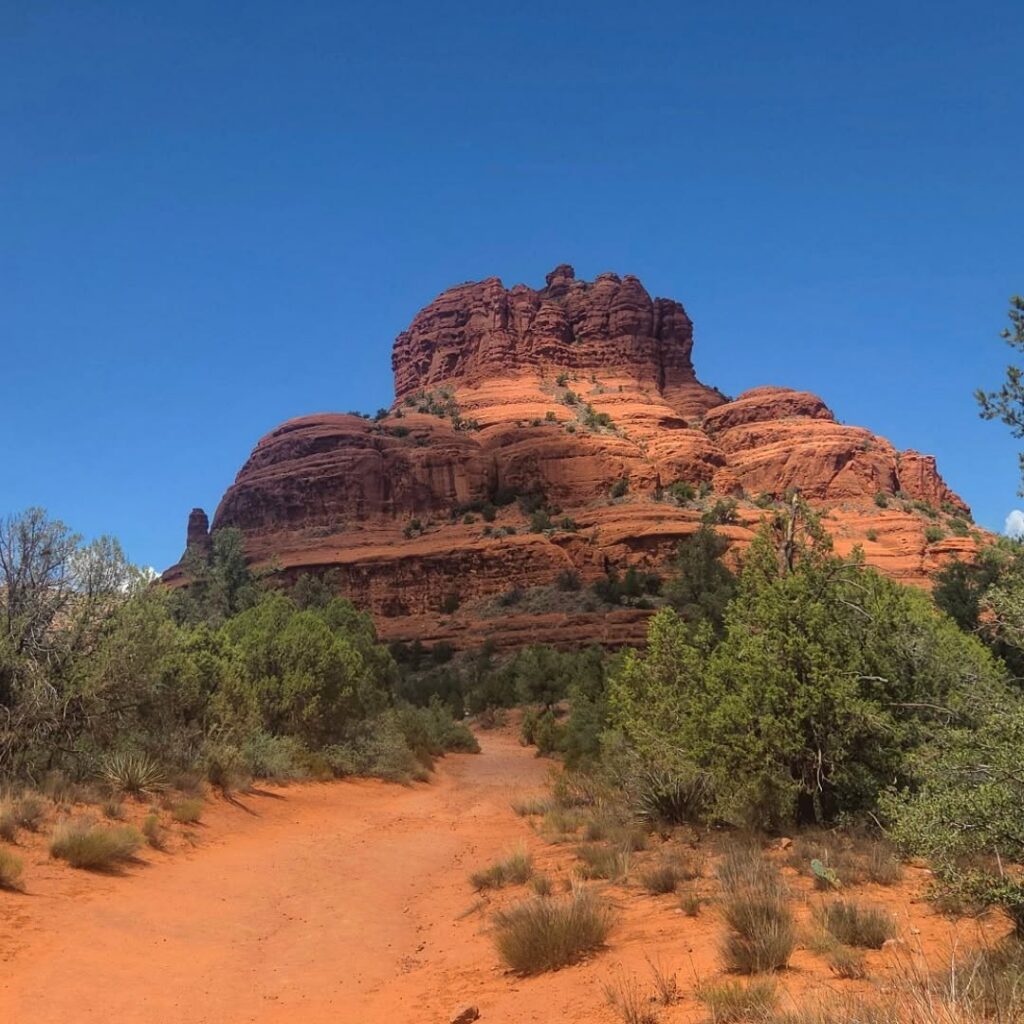
If you only have time for one easy trail and want it to look unmistakably like Sedona, Bell Rock is hard to beat.
The formation itself is enormous.
And unlike hikes where you spend most of your time approaching the interesting scenery, Bell Rock gives you dramatic views almost immediately.
The key is understanding the difference between Bell Rock Pathway and trying to climb higher onto Bell Rock itself.
Those are not the same experience.
Keep Bell Rock Easy
If your goal is an easy hike, stay on the established lower pathways and enjoy the surrounding landscape.
You do not need to scramble higher up the formation.
This is one of those places where curiosity can quietly turn an easy outing into something considerably more challenging.
You’ll see people climbing farther.
That doesn’t mean you have to follow them.
The lower area already gives you fantastic views.
Is Bell Rock Good for First-Time Visitors?
Very.
In fact, I’d consider it one of the best introductions to Sedona.
You’re surrounded by the type of red-rock landscape you came to Arizona to see, but you can control how long you stay and how far you walk.
That flexibility makes the Bell Rock Trail in Sedona particularly useful when you’re traveling with people who have different energy levels.
One person can explore farther while another keeps things relaxed.
Is Bell Rock an Easy Vortex Hike?
Bell Rock is commonly associated with Sedona’s vortex culture, which also makes it one of the better-known options for travelers looking for easy Sedona vortex hikes.
You don’t have to climb to some exact point to experience the area.
Whether you’re interested in vortex beliefs, meditation, photography, or simply sitting beneath a giant red-rock formation, the lower trails are enough.
Best for: Classic Sedona scenery
General difficulty: Easy if you remain on lower routes
Vortex association: Yes
Biggest mistake: Assuming you have to climb Bell Rock
4. Sugarloaf Loop — Best Easy Sedona Hike for Sunrise
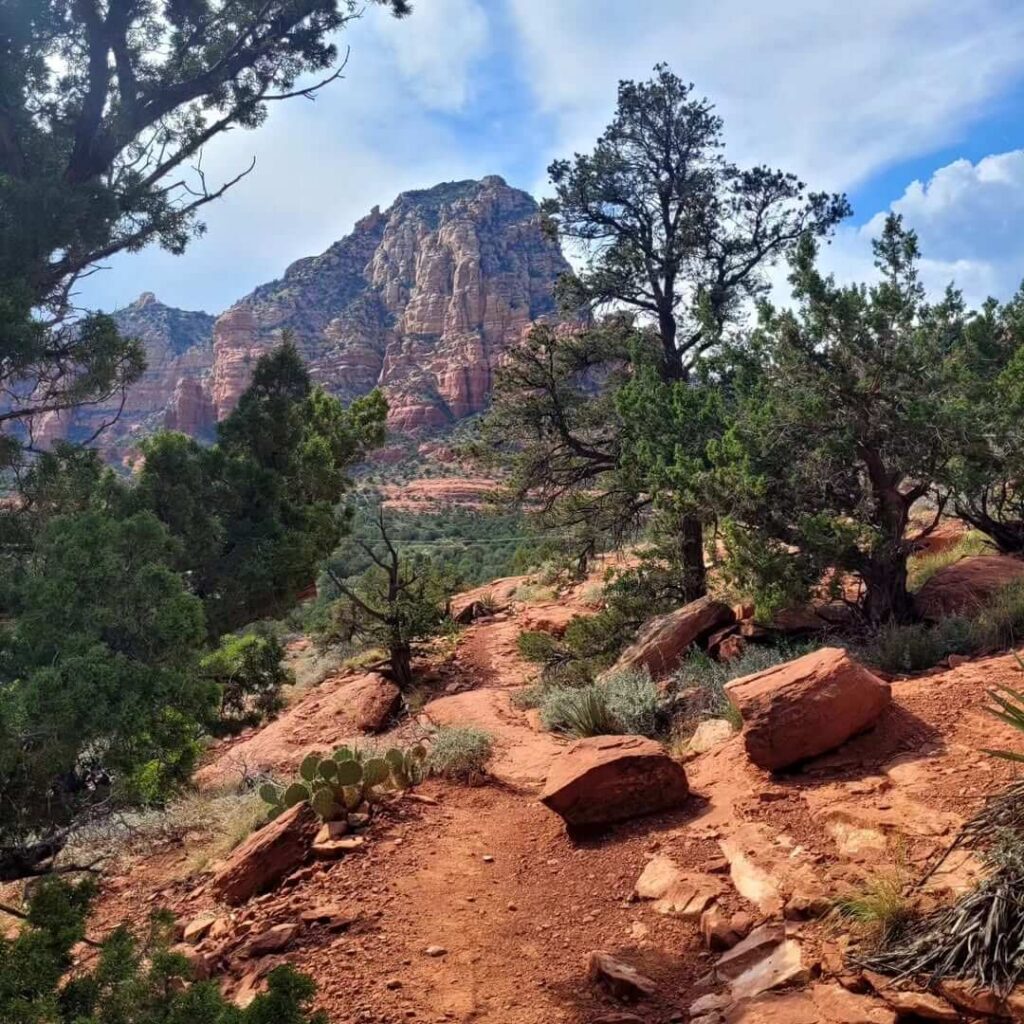
If getting up for sunrise is already asking a lot, the hike itself doesn’t need to be brutal.
That’s where the Sugarloaf area comes in.
It gives you elevated red-rock scenery without turning your morning into a major climbing mission. As the light starts reaching the surrounding formations, the landscape changes surprisingly quickly.
One minute everything looks muted and sleepy. A little later, the rocks are glowing orange.
Why Sugarloaf Works Well in the Morning
The main advantage is that you can get impressive views without committing half your day to the trail.
For travelers searching for the best Sedona hikes for sunrise, that’s useful.
You can hike, watch the morning light, head back into town for breakfast, and still have practically your entire day ahead of you.
Do You Need to Hike Before Sunrise?
Not necessarily.
If you’re uncomfortable navigating in darkness, there’s nothing wrong with starting around first light instead.
You’ll still get beautiful morning scenery.
If you do start in the dark, bring a proper headlamp and download your route beforehand. Your phone flashlight isn’t something I’d want to depend on while walking over uneven desert terrain.
Best for: Sunrise and morning views
General difficulty: Easy to moderate depending on route
Best time: Early morning
Good for beginners: Yes, with an appropriate route
5. Teacup Trail — An Easy Hike That Feels More Local
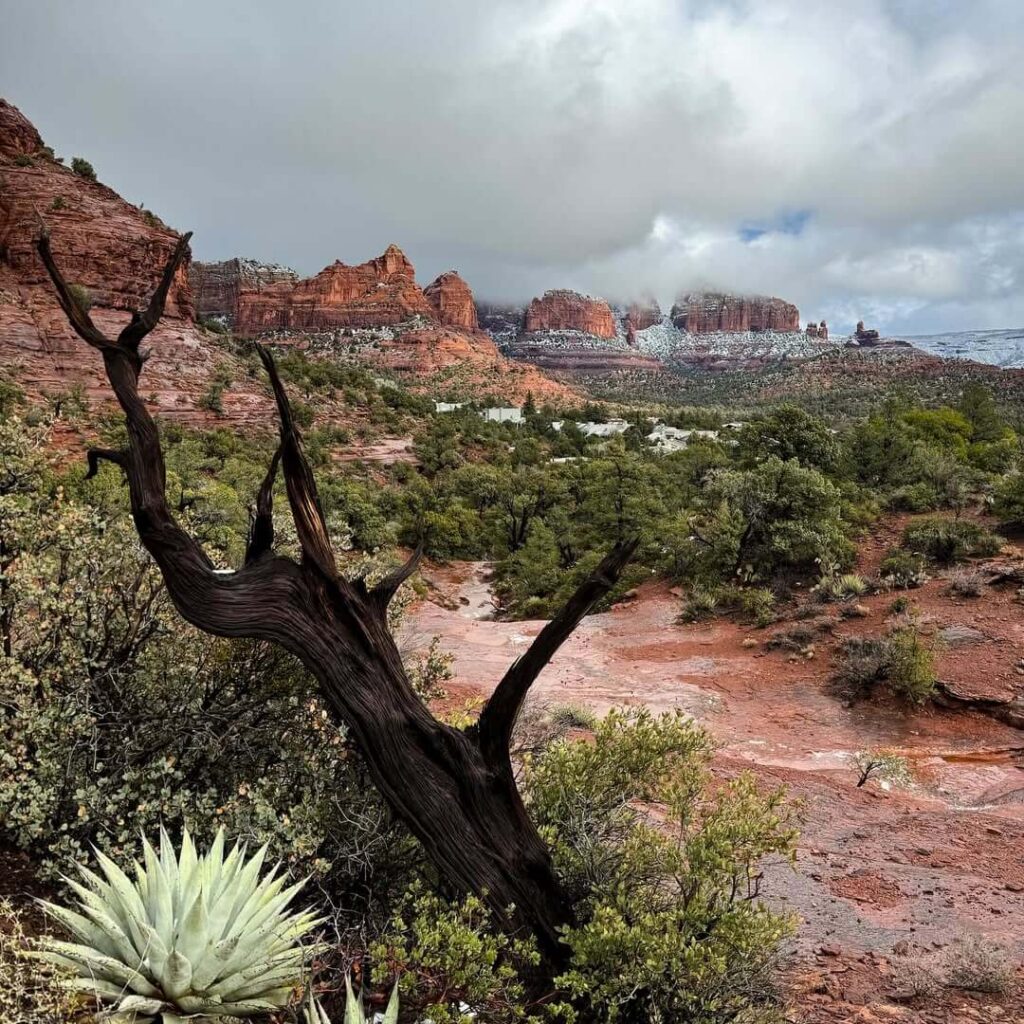
Teacup Trail is a good choice when you’ve already seen Bell Rock plastered across every Sedona travel guide and want something a little different.
You still get the red rocks.
You still get wide desert views.
But the hike feels less centered around reaching one famous attraction.
And sometimes that’s exactly what you need.
What Makes Teacup Trail Different?
It’s more about the walk itself.
Instead of spending the entire hike thinking about the viewpoint waiting at the end, you can enjoy changing perspectives of the surrounding formations as you go.
That makes it especially nice for a slower morning.
Stop for photos.
Look behind you occasionally.
Take a water break somewhere pretty.
There’s no need to race.
Is Teacup Trail Good for Beginners?
It can be, but I’d place it slightly above the easiest options in this guide.
If you’ve already tried something like Yavapai Vista or Fay Canyon and thought, “Okay, I can handle a little more,” Teacup can be a natural next step.
The exact difficulty will depend on how far you explore and which connecting trails you use.
Best for: Relaxed red-rock walking
General difficulty: Easy to moderate
Good for: Beginners ready for a little more trail time
Feel: Scenic without being built around one famous photo
6. Deadman’s Pass Trail — A Relaxed Desert Walk
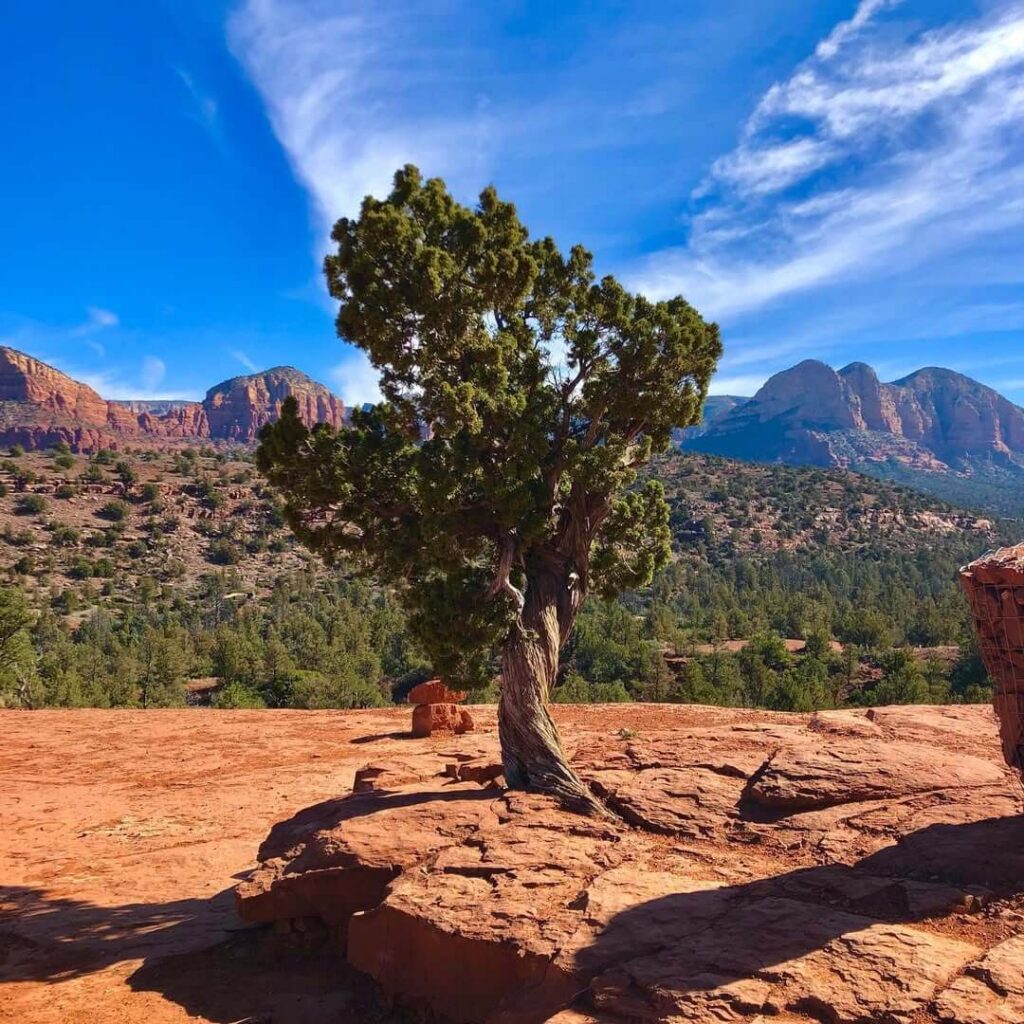
Ignore the slightly dramatic name.
Deadman’s Pass can actually be a fairly relaxed way to explore Sedona’s desert landscape.
Rather than climbing aggressively toward a summit, you’re moving through open terrain with red-rock formations surrounding you.
It’s the kind of hike I’d choose when I want to be outside for a while but don’t want the entire morning to feel like a workout.
Why Choose Deadman’s Pass?
Because not every Sedona trail needs a dramatic finale.
There’s something nice about simply walking through the landscape without counting down the distance to an arch, summit, or Instagram viewpoint.
It can also be useful if you’re trying to avoid stacking several steep hikes on consecutive days.
One Thing to Remember
Deadman’s Pass connects into a broader trail network.
That makes having a Sedona hiking trails map especially useful.
Know which route you’re following before you start, and don’t assume every junction leads back to where you parked.
Download your map for offline use rather than relying on cell service.
Best for: Easy desert walking
General difficulty: Easy depending on route
Good for: A slower hiking day
Navigation: Check your intended route before starting
7. Red Rock Crossing — Best Easy Walk for Cathedral Rock Views
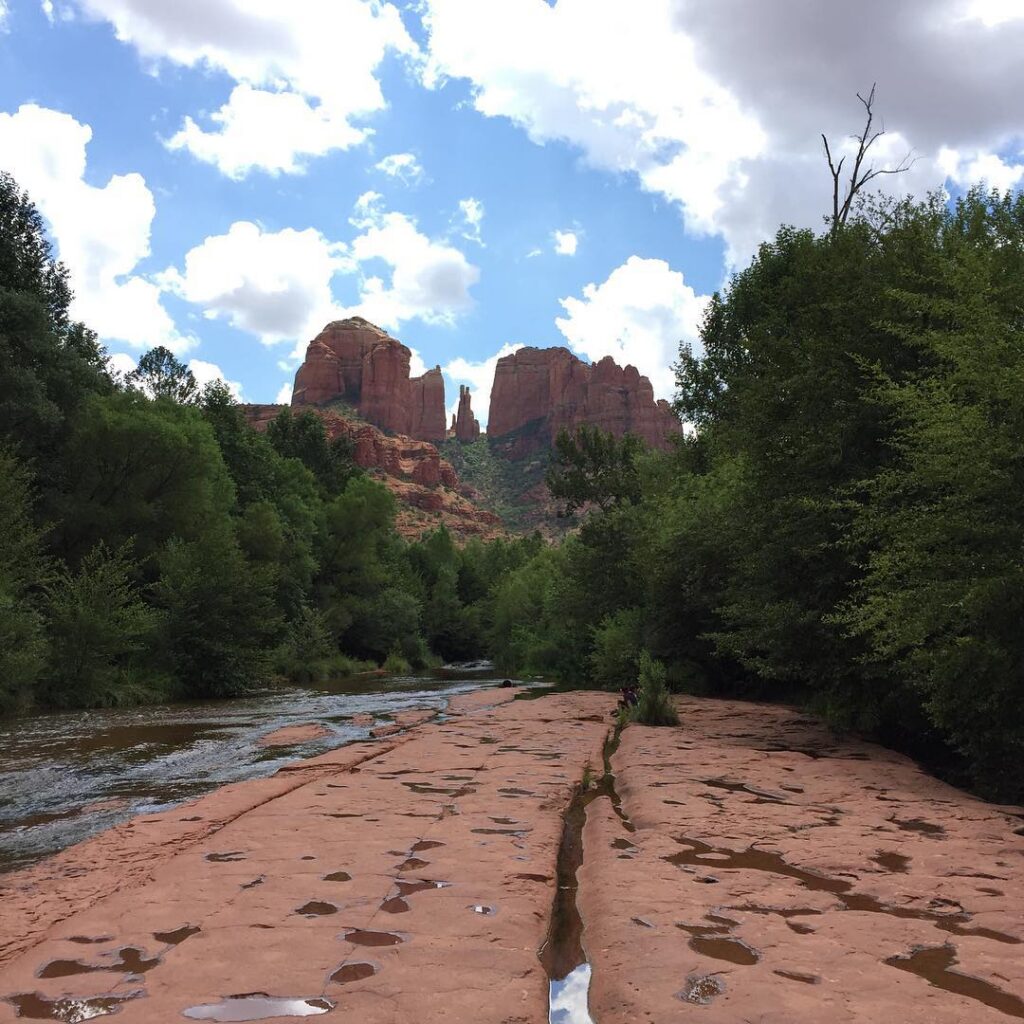
Remember when we talked about Cathedral Rock earlier?
This is the alternative I’d consider if you want the famous view without the famous scramble.
The Red Rock Crossing area gives you beautiful perspectives of Cathedral Rock from around Oak Creek.
And because you’re viewing the formation from farther away, you can actually appreciate its shape.
That’s something you don’t always get when you’re standing directly underneath it.
This Is Not the Cathedral Rock Climb
That’s important.
If you searched “Cathedral Rock Trail easy” hoping to find a beginner version of the main climb, Red Rock Crossing is a much better direction to look.
You aren’t completing Cathedral Rock Trail.
You’re choosing an easier walking experience that gives you views of Cathedral Rock instead.
For beginners, families, photographers, or anyone uncomfortable with scrambling, that can be a far more enjoyable afternoon.
Why Photographers Love This Area
Water changes everything.
Much of Sedona hiking involves dry desert terrain, so having Oak Creek in the foreground creates a completely different scene.
Under the right conditions, you can get Cathedral Rock, trees, water, and red sandstone in the same view.
Even if you don’t care about photography, it’s a beautiful place to slow down.
Is Red Rock Crossing Family-Friendly?
For many families, this area can be more approachable than Sedona’s steeper trails.
But children still need supervision around water, rocks, uneven surfaces, and any slippery areas near the creek.
“Easy” doesn’t mean switch your brain off.
Best for: Cathedral Rock views
General difficulty: Easy walking depending on route
Great for: Families, beginners and photographers
Choose this instead of: Cathedral Rock’s main climb if scrambling isn’t your thing
8. Marg’s Draw Trail — Easy Access to Big Red-Rock Scenery
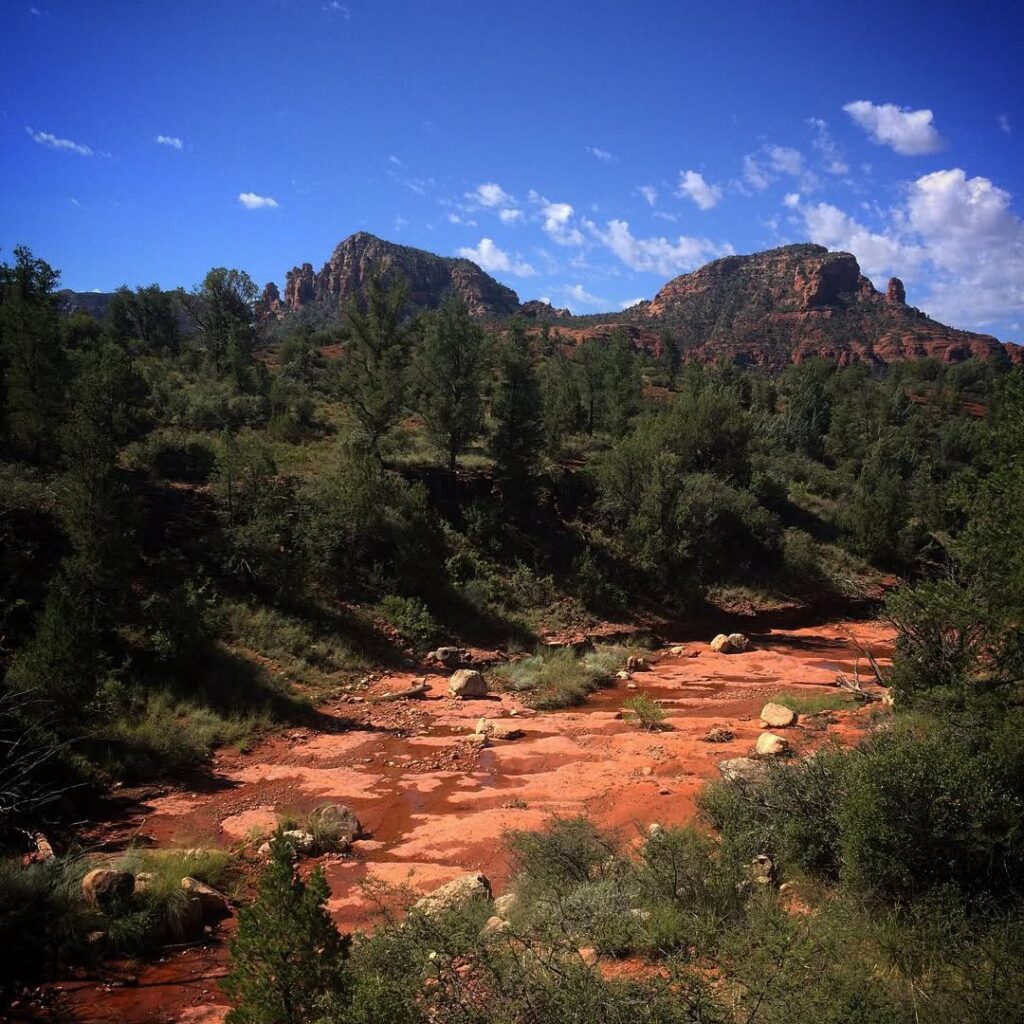
Marg’s Draw is useful when you want to hike without turning getting to the hike into half the adventure.
The trail sits close to central Sedona, yet once you’re walking, the scenery quickly starts feeling much more removed from town.
You’ll get open desert, red-rock formations, and broad views without needing to chase one specific landmark.
Why Marg’s Draw Belongs on an Easy-Hikes List
Flexibility.
You don’t necessarily need to make the longest possible version of the hike your goal.
If you’re having a great day, continue exploring.
If it’s hotter than expected or your legs are tired, shorten the outing.
That makes it a useful choice for beginners who are starting to understand what distance feels comfortable for them.
A Good “Second Sedona Hike”
I particularly like trails like this after you’ve already completed your first easy hike.
Maybe Fay Canyon felt comfortable.
Maybe Bell Rock left you wanting more.
Marg’s Draw gives you the opportunity to spend longer on the trail without immediately jumping to something like Cathedral Rock or Bear Mountain.
Best for: Convenient red-rock hiking
General difficulty: Easy to moderate depending on distance
Good for: Beginners wanting a slightly longer outing
Big advantage: Close to town
9. Andante Trail — A Quiet Morning Walk Beneath the Red Rocks
Andante isn’t usually the trail people build their entire Sedona vacation around.
That’s actually why it belongs here.
Some mornings, you don’t need another bucket-list attraction.
You just want a peaceful walk.
The Andante area gives you that opportunity, with desert vegetation and views toward the surrounding red-rock formations.
Why Choose a Lesser-Known Walking Trail?
Because famous isn’t always better.
If you’ve already spent a morning around one of Sedona’s major attractions, a simpler trail can feel refreshing.
There’s less pressure to reach the photo spot.
You can concentrate on the landscape rather than the destination.
It’s also the kind of option worth remembering when you’re searching for Sedona walking trails rather than strenuous hikes.
Best for: A peaceful morning walk
General difficulty: Easy depending on route
Good for: Slower days and casual hikers
Experience: More about walking than reaching a landmark
10. Thunder Mountain Trail — Easy Red-Rock Views Without a Big Climb
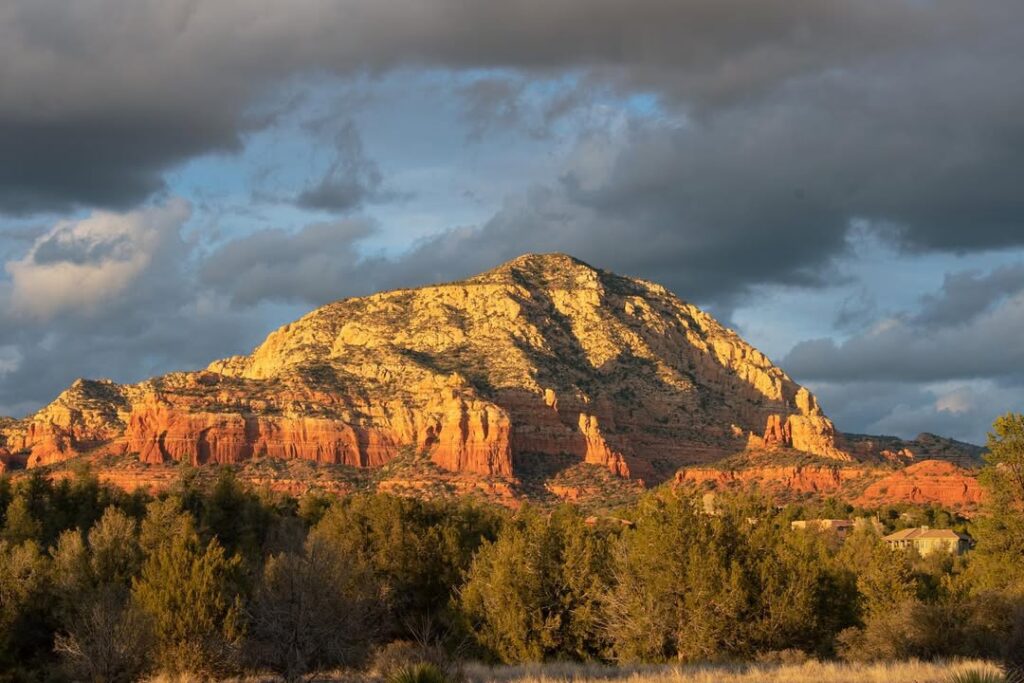
Thunder Mountain is a good option when you want to spend a little more time outdoors without jumping straight into one of Sedona’s demanding hikes.
The trail takes you through classic desert scenery with impressive formations rising around you.
What I like about this area is that the views aren’t saved for one dramatic finish.
You get scenery throughout the walk.
Why Beginners Might Like Thunder Mountain
You can keep the outing relatively relaxed.
Rather than thinking of the trail as something you absolutely need to “complete,” choose a comfortable turnaround point.
That’s particularly useful when you’re still learning how your body handles desert hiking.
Maybe you feel fantastic and continue farther.
Maybe the sun is stronger than expected and you head back early.
Both are perfectly good hiking days.
Best for: Red-rock views
General difficulty: Easy to moderate depending on route
Good for: Beginners comfortable with natural trails
Biggest advantage: Flexible distance
11. Jordan Trail — Easy Desert Hiking With Plenty of Scenery
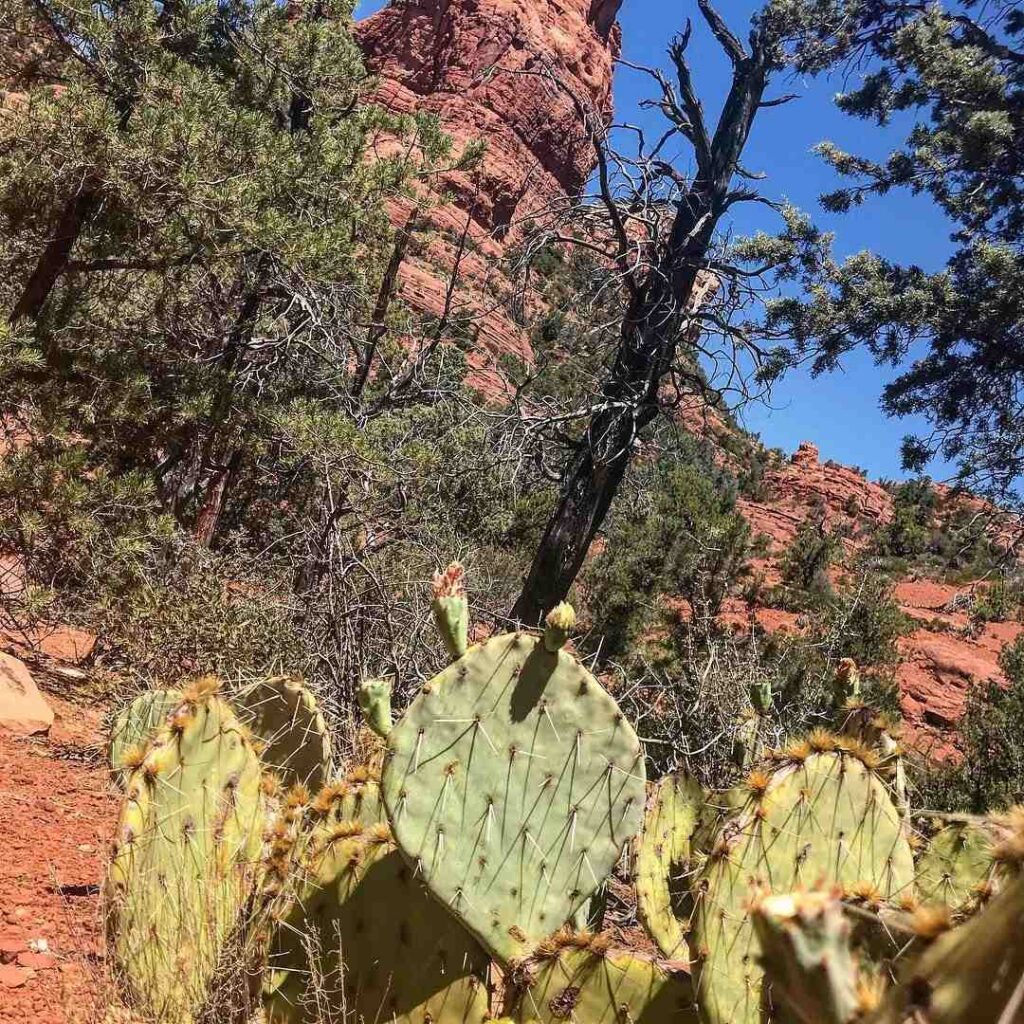
Jordan Trail is another option for travelers who care more about being surrounded by Sedona’s landscape than reaching a famous landmark.
You’ll move through open desert terrain with red-rock views around you.
It’s a nice middle ground between a very short scenic walk and a more serious half-day hike.
Why Choose Jordan Trail?
Sometimes the famous trails create unnecessary pressure.
You feel like you need to arrive at a certain time, reach a particular viewpoint, get the photo, and move on.
Jordan is better approached as a walk through the landscape.
There’s no need to rush.
Because the surrounding trail network offers different possibilities, though, this is another place where having your route downloaded beforehand is smart.
Best for: Relaxed desert exploration
General difficulty: Easy to moderate depending on route
Good for: Travelers wanting something beyond the headline hikes
Remember: Know your intended route at trail junctions
12. Crescent Moon / Oak Creek Walks — Best for a Slow Family Day

Let’s finish the list somewhere that doesn’t really need to feel like a “hike” at all.
The Crescent Moon and Oak Creek area works beautifully when your priority is scenery rather than mileage.
You can spend time around the creek, enjoy views toward Cathedral Rock, walk at a comfortable pace, and stop whenever you find somewhere you like.
That’s particularly useful for mixed groups.
Maybe one person loves hiking.
Another just wants pretty views.
Someone else is traveling with younger kids.
You don’t always need to force everybody onto the same three-hour trail.
Why This Works for Families
There’s more freedom to make the outing your own.
You’re not committed to reaching a summit before turning around.
That said, don’t confuse relaxed with completely hazard-free.
Creekside rocks can be slippery, water conditions can change, and children still need close supervision.
Treat it as an outdoor area rather than a city park.
Best for: Families and slower days
General difficulty: Easy walking depending on route
Views: Cathedral Rock and Oak Creek scenery
Good for: Travelers who don’t really want a traditional hike
Best Easy Hikes by Category
To narrow down your options quickly:
- For First-Time Desert Walkers: Fay Canyon offers an enclosed, flat red-rock canyon experience without sheer drop-offs or slickrock ledges.
- For the Lowest Effort to Highest View Ratio: Yavapai Vista reaches open platform views of Bell Rock and Courthouse Butte within a 10-minute walk.
- For Iconic Postcard Views: Bell Rock Pathway provides direct access to Sedona’s signature monolith on a wide, gently graded trail.
- For Photography Without the Climb: Crescent Moon / Red Rock Crossing captures Cathedral Rock reflected in Oak Creek without the steep rock scrambles of the main summit route.
- For Sunrise Color: Sugarloaf Loop delivers quick 360-degree morning light across West Sedona with minimal elevation gain.
Easy Sedona Vortex Sites
You do not need to climb vertical rock faces to visit Sedona’s recognized vortex locations:
- Bell Rock: The wide lower pathway runs straight along the base of the formation. You can access the entire scenic and energetic area from flat ground without scrambling up the slickrock benches.
- Airport Mesa: Skip the steep loop around the perimeter; simply head to the lower scenic viewing spur near the trailhead for panoramic views over central Sedona.
- Cathedral Rock Alternative: The main Cathedral Rock trail requires steep climbing and hand-over-foot scrambling. For a flat vortex experience with Cathedral Rock as your backdrop, stick to the Red Rock Crossing waterside trail.
Seasonal Tips: Winter & Sunrise Easy Hikes
- Sunrise Walks: Early starts offer quiet trails and glowing sandstone walls, but trailheads are pitch black 45 minutes before sunrise. Always carry a dedicated headlamp rather than draining your phone battery, and download your trail route offline before setting out.
- Winter Freezes & Mud: Sedona sits at 4,350 feet elevation. Freezing overnight temperatures can coat shaded slickrock in black ice. If trails are excessively muddy from melting snow, avoid walking off-trail to skirt puddles—doing so damages native cryptobiotic soils and widens trail corridors.
5 Essential Rules for Easy Desert Trails
- Calculate Terrain Over Distance: A 1-mile trail with 400 feet of rocky elevation is far more demanding than a flat 3-mile canyon walk. Look at elevation profiles, not just mileage.
- Pack Ample Water: The arid climate accelerates dehydration even on flat, 45-minute walks. Carry a minimum of 1 liter per person for short outings.
- Download Offline Maps: Cell service cuts out inside sandstone canyons. Download your route offline so you can verify trail junctions without a data connection.
- Wear Shoes with Sticky Rubber Outsoles: Smooth-soled fashion sneakers slip easily on loose gravel and dry slickrock. Choose broken-in footwear with dependable tread.
- Know Your Turnaround Point: Turn around whenever fatigue sets in, the heat rises, or water runs halfway down. On an out-and-back trail, every step forward is a step you must retrace.
How Many Easy Hikes Can You Plan in a Day?
Rather than trying to pack multiple trailheads into one itinerary, combine one structured morning walk with an unstructured afternoon scenic stop:
- Option A (Classic Red Rocks & Canyon):
- Morning: Fay Canyon (flat canyon floor)
- Afternoon: Crescent Moon / Oak Creek (shaded waterside walk)
- Option B (Sunrise & Postcard Views):
- Sunrise: Sugarloaf Loop
- Mid-day: Lunch and town exploration
- Late Afternoon: Lower Bell Rock Pathway
Picking one or two well-matched trails leaves you with steady energy to take in the red rocks at an unhurried pace.
Final Thoughts
There’s a strange idea that visiting Sedona properly means climbing the steepest rock you can find.
It doesn’t.
You can walk beneath Bell Rock, wander into Fay Canyon, watch morning light hit the red rocks from an easier viewpoint, or spend an afternoon beside Oak Creek and still have an incredible trip.
For beginners, I’d actually recommend starting easy.
Figure out how the terrain, elevation, sun, and dry air feel before deciding whether you want something harder.
And if an easy trail gives you exactly the experience you wanted?
There’s no reason it needs to become more difficult.
Frequently Asked Questions
What is the best easy hike in Sedona for first-time visitors?
Bell Rock Pathway is the best introduction. You get direct views of one of Sedona’s most famous formations right from the parking area on a wide, gently graded trail. You don’t need to scramble up the rock to enjoy it—simply walk as far as you feel comfortable along the lower path and turn back. For a flat walk enclosed by red-rock walls rather than open desert, Fay Canyon is the best alternative.
Is Cathedral Rock Trail considered an easy hike?
No. Despite its short distance (roughly 1.2 miles round-trip), the main Cathedral Rock Trail is a strenuous slickrock scramble that requires using your hands to climb steep rock crevices. If you want Cathedral Rock views without the steep climb, head to Red Rock Crossing / Crescent Moon, where you get panoramic views of the formation across Oak Creek on a completely flat path.
What is the easiest Sedona vortex hike?
Bell Rock is the most accessible vortex site. The lower pathway circles the base along flat, hard-packed red dirt, allowing you to experience the area without any elevation gain or technical climbing.
Do I need heavy hiking boots for easy trails in Sedona?
No, heavy boots aren’t required, but smooth-soled casual sneakers or flip-flops should be avoided. Sedona’s trails feature loose red dirt, gravel, and slick sandstone. A lightweight trail runner or low-cut hiking shoe with sticky rubber outsoles provides the necessary traction to prevent slipping.
Do easy Sedona trails require a Red Rock Pass?
Most National Forest trailheads require an active Red Rock Pass (or America the Beautiful Pass) displayed on your dashboard. However, rules vary by location: fee-free lots exist, and day-use areas like Crescent Moon charge a separate entrance fee where standard Red Rock Passes are not accepted. Always verify the specific parking regulations for your trailhead before setting out.